
.jpeg)
There is a moment in almost every Trolltunga daydream when the photograph turns into a question: could I actually go there? The answer may well be yes. The next step is understanding the walk behind that extraordinary view.
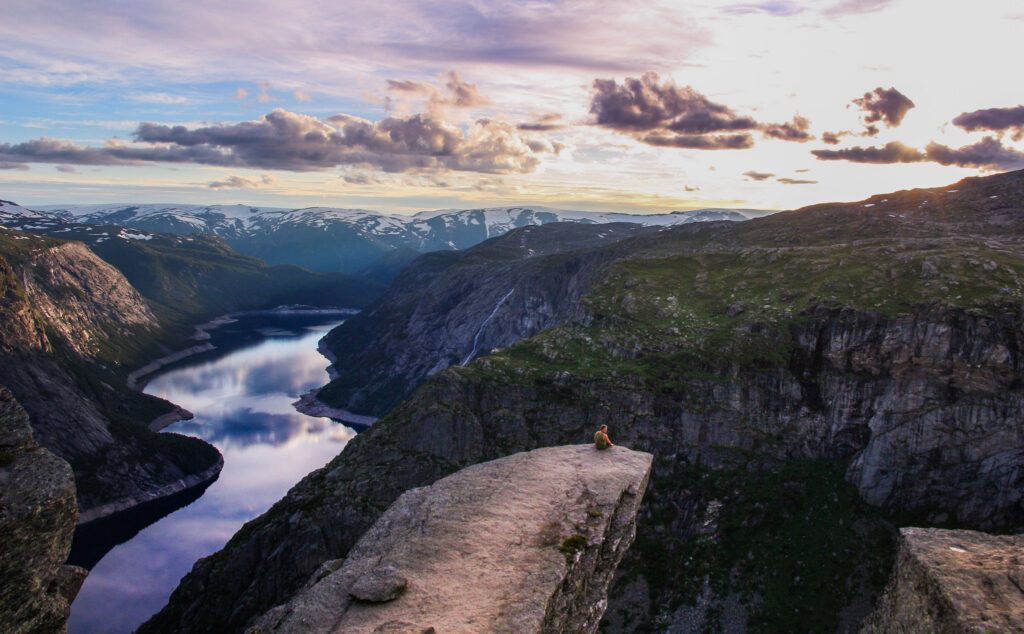
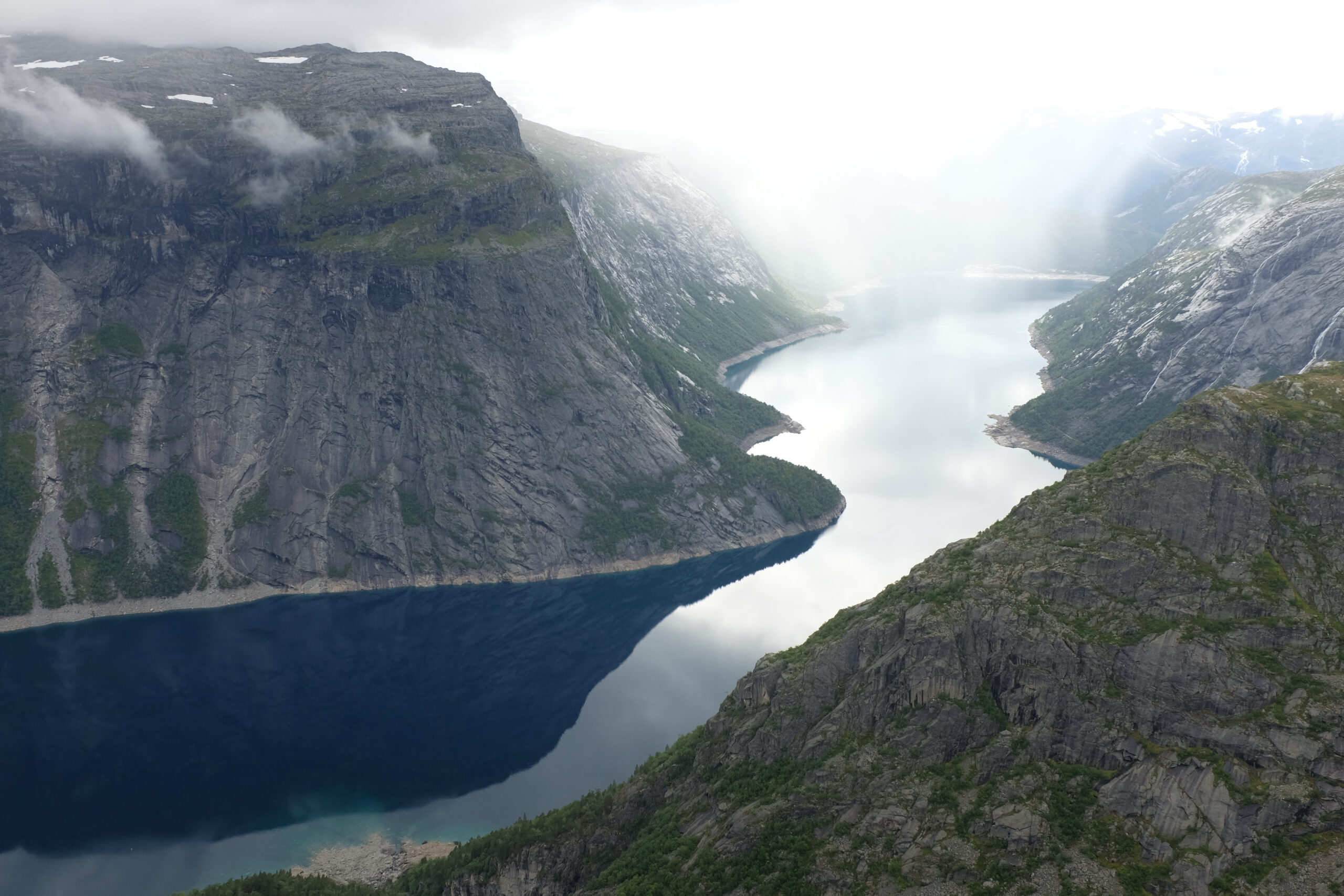
Trolltunga stretches out above Lake Ringedalsvatnet in western Norway, with steep mountain walls falling towards the water below. It is a spectacular destination, but the journey deserves as much attention as the ledge. This guide will help you choose a starting point, prepare for the conditions and decide whether a day hike or a slower adventure with nights in a tent suits you best.
In this guide
How long is the Trolltunga hike?
The two main starting points make a significant difference to your day. These are the official estimates for the standard return hike:
- From P2 Skjeggedal: 27 km return, with an estimated walking time of 8–12 hours.
- From P3 Mågelitopp: 20 km return, with an estimated walking time of 7–10 hours.
Source: official Trolltunga route guide. Your pace, conditions and stops will affect the time required.
Starting higher removes part of the approach, but leaves a substantial mountain walk. Expect uneven ground and further climbing and descending along the way. Plan a comfortable margin for breaks and a possible photograph queue, then remember that reaching Trolltunga is only halfway through the return trip.
Our planning tip: work backwards from your transport arrangements and the time you want to finish. An early, unhurried start is far more enjoyable than spending the afternoon watching the clock.
Can a beginner hike Trolltunga?
“Beginner” can mean several things. You might be comfortable walking all day but have never slept in a tent. Or you might be starting with short local walks. Those are very different starting points for this adventure.
Trolltunga calls for good hiking fitness and stamina. Before committing, try a longer walk on uneven, hilly ground in the boots you intend to bring. For an overnight trip, practise with a loaded backpack too. Notice how you feel during the final hour, and be honest about what needs more preparation.
A guide can help with planning, pacing and decisions in the mountains. You still need to do the walking and carry your equipment. If camping is new to you, that support can make a first overnight adventure feel much more approachable. Tell us about your experience and we can discuss whether the trip is a sensible next step.
When should you go?
The official summer hiking period runs from 1 June to 30 September for experienced hikers travelling independently. The long daylight of early summer is part of the appeal: there is room to enjoy the landscape without treating every pause as lost time. Outside the summer period, conditions require different preparation; consult the official seasonal guidance before making plans.
June does not guarantee a snow-free trail. Snow can remain into late June in some years. Check recent route reports and the mountain forecast, and be prepared to adapt. A pleasant morning down in the valley does not tell the whole story higher up.
For our planned June 2027 adventure, the exact three days will be agreed with the group. Leave room for sensible planning before you commit to non-refundable travel arrangements.
.jpg)
Getting there: make the morning simple
Look for accommodation around Odda and the wider area, then plan your connection to the trail. There are three parking areas: P1 Tyssedal, P2 Skjeggedal and P3 Mågelitopp. Seasonal shuttle services connect the area, with a separate service between P2 and P3. Upper parking is limited and needs advance planning.
Check the official parking and transport information for your actual dates. Do not assume a previous summer’s road opening, timetable or price applies to 2027. For a camping trip, check overnight parking arrangements as well as the last shuttle on your return day.
Arriving in the area the evening before is a useful way to simplify things. You can pack carefully, organise breakfast and start the morning with your walk ahead of you, rather than a long drive behind you.
What to pack for the hike
Pack for a mountain day, even when the photographs look summery. The official preparation guide is a useful starting point:
- Footwear you already trust: supportive hiking boots with grip, tested before the trip.
- Weather protection: waterproof and windproof outer layers, insulating clothing, a hat and gloves.
- Food for a long day: proper meals and accessible snacks, with a little extra in reserve.
- Navigation and communication: a map and a way to navigate without mobile reception; keep your phone charged and protected.
- Small essentials: sun protection, a headtorch, a compact first-aid kit and a bag for your rubbish.
For camping, add a suitable mountain tent, a warm sleeping bag, an insulated sleeping mat and cooking equipment. Test your setup before leaving home. Finding out how your tent poles fit together is much more pleasant in a garden than in mountain wind.
Water, toilets and a few thoughtful habits
Start with drinking water and plan your refills. Water is available at P2, but do not assume every stream on the mountain is safe to drink from. For overnight travel, plan an appropriate water-treatment method and follow the local water and toilet guidance.
There are no toilets along the mountain route. Plan ahead, keep well away from water sources and carry out rubbish and used toilet paper. Bring a small sealable waste bag so doing the right thing is straightforward.
Why turn Trolltunga into a camping adventure?
A day hike gives you a memorable destination. Staying overnight gives you a different relationship with the place. You have a camp to set up, a meal to prepare and time to watch the light move across the mountains. The small things become part of the story: a warm mug in your hands, food shared after a walk, the satisfying moment when your sleeping bag finally feels like home.
There is a practical trade-off: a camping pack is heavier, and comfort depends on preparation. Three days create more time outdoors, while adding the responsibility of looking after yourself between the walking sections. That is precisely what makes an introductory overnight trip rewarding.
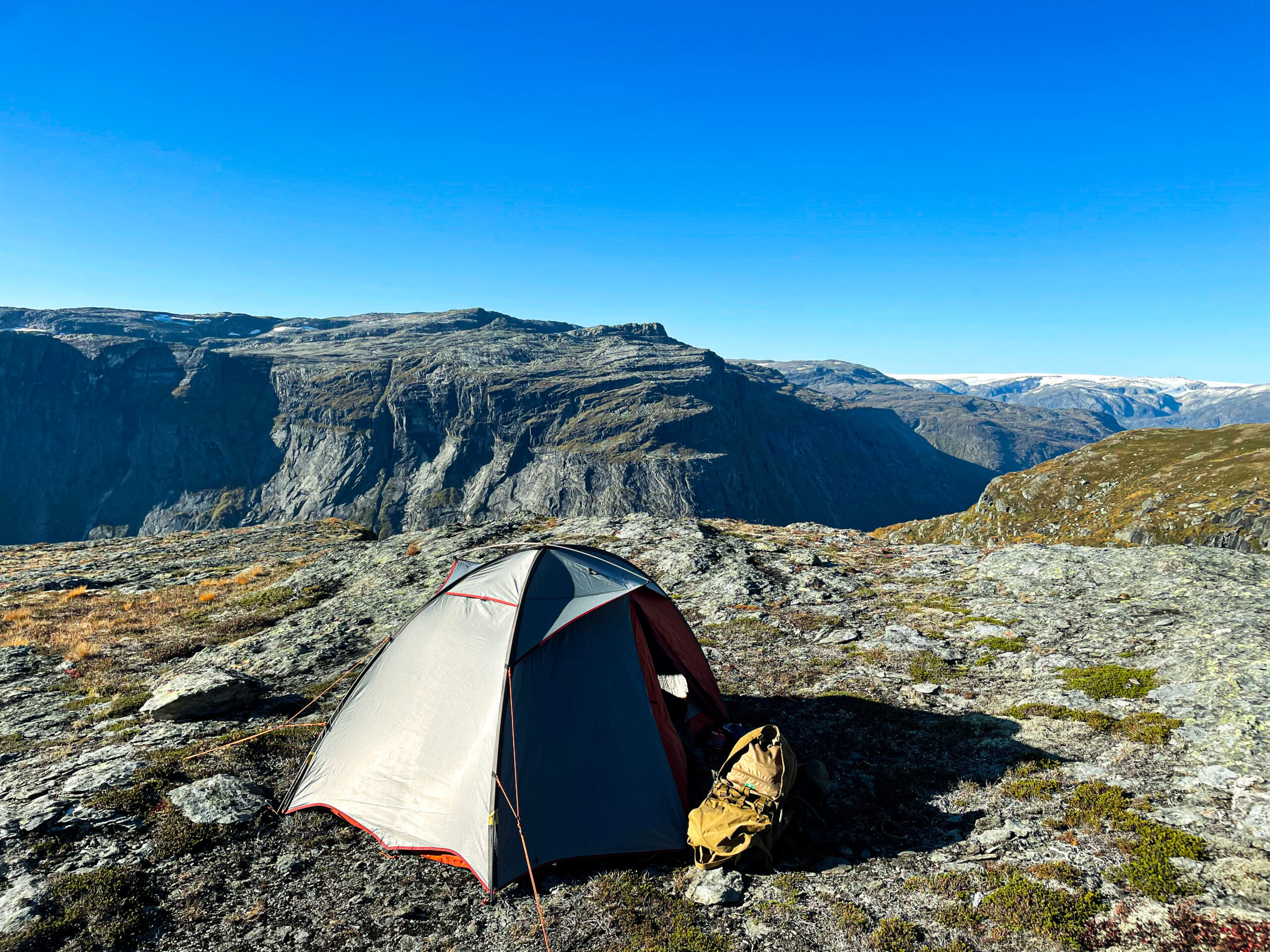
Choose your camp using the official camping map and guidance. Respect restricted areas, keep away from drinking-water sources and avoid fragile vegetation. A beautiful patch of ground is not automatically an appropriate campsite. Use a suitable stove for cooking where permitted, follow current fire restrictions and leave the place as you found it.
Enjoy the view without chasing the photograph
Give yourself permission to enjoy Trolltunga in your own way. Stay well back from exposed edges, especially in wind or on slippery ground. There is no obligation to step onto the ledge for a photograph, and a trip can be wonderful without a particular pose.
Make changing the plan an ordinary part of preparation. Agree how you will judge conditions, how much energy you need for the return and when to turn around. Coming home with an appetite for another mountain day is a good result.
Come into the Norwegian mountains with us
If the idea of sleeping outdoors appeals to you but organising the whole trip feels like a leap, our three-day guided Trolltunga tent hike is designed to help you take that step. It combines the walk with two nights in a tent, support with preparation and a small group to share the experience.
June 2027 · Three days, two tent nights · Maximum six guests · €399 per person
The exact dates are agreed with the group. Guiding and support are included. Travel, food, camping equipment and other personal costs are arranged and paid for by participants. We coordinate food plans before departure and prepare meals together at camp: simple outdoor cooking becomes part of the adventure.
First-time overnight hikers are welcome with good hiking fitness, a willingness to carry their equipment and an adventurous outlook. Send us an enquiry to discuss your experience and preferred dates; the departure page has the current details.
Prefer another destination or a trip shaped around your own group? Explore our hiking adventures or ask about a private adventure. A good first conversation starts with what you would love to experience, and what you feel ready for.
Trail information checked against official Trolltunga guidance on 2 October 2026. Distances and times describe the standard return hike; a guided multi-day itinerary may differ. Conditions, access and transport schedules can change. Check the linked official information before travelling.